
A handmade kukri begins with fire, steel, and the skill of an experienced bladesmith.
At Grace Kukri House, our kukris are handcrafted in Nepal using traditional techniques and genuine materials. From heating and hammering the steel to shaping and finishing the blade, each kukri is carefully made by skilled Nepali craftsmen.
In this post, we are sharing a glimpse of the traditional kukri-making process from our workshop in Kathmandu, Nepal.
From Steel to Kukri
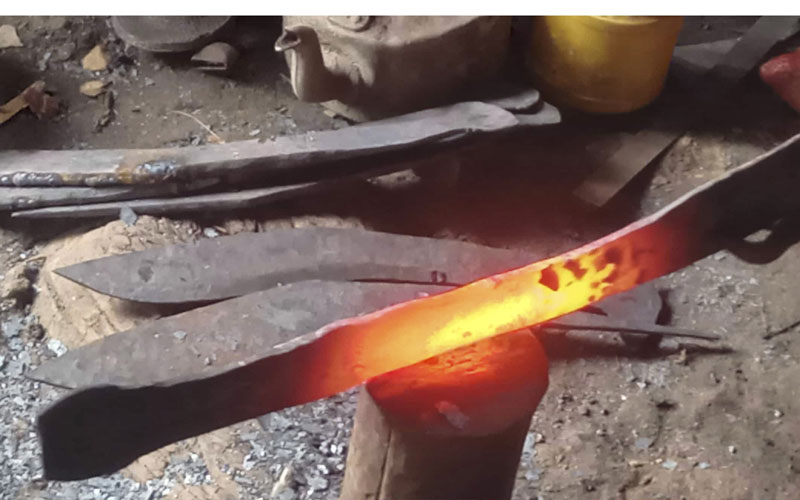
The traditional kukri-making process begins by heating the steel in a forge until it reaches the right temperature for shaping. The hot steel is then carefully hammered by hand to form the distinctive curved shape of the kukri blade.
This process requires experience, patience, and careful control at every stage. The bladesmith gradually shapes the blade while maintaining its strength, balance, and traditional form.
Once the basic shape is complete, the blade goes through further shaping, grinding, heat treatment, and finishing. Each stage is carried out with care to create a strong and functional handmade kukri while preserving the traditional character of the Nepalese kukri.
At Grace Kukri House, we are proud to continue this traditional craftsmanship in Kathmandu, Nepal, working with skilled Nepali bladesmiths to create handmade kukris and knives.
Handmade in Nepal
Every kukri we make carries the skill and tradition of Nepali bladesmiths. At Grace Kukri House, we are committed to preserving this craftsmanship and sharing authentic handmade kukris from Nepal with customers around the world.
Follow Grace Kukri House for more photos and stories from our workshop and the traditional kukri-making process.